
SEO is not Dead. Let’s get one thing straight.
SEO didn’t die.
It didn’t get “killed” by AI.
It didn’t disappear because Google changed the rules again.
Lazy SEO died.
And honestly? It deserved to.
Every time someone says “SEO is dead,” what they really mean is:
“The easy way I was ranking no longer works.”
That’s not the same thing.
Read SEO Tips That Still Work After Multiple Core Updates (2026)
Table of Contents
SEO Is Not Dead — It Has Simply Evolved
SEO is not dead, but the way it works has changed. What no longer survives are shortcuts, low-effort content, and copy-paste strategies. Modern SEO rewards sites that are built with strong technical foundations, clear intent, and real value for users. Those who adapt and focus on systems—not tricks—continue to see consistent, long-term results.
SEO Has Always Been About Adaptation — Not Tricks
SEO was never meant to be a shortcut.
People just treated it that way.
In the early days, ranking was easy because search engines were naive.
You could:
- Stuff keywords
- Buy garbage links
- Spin articles
- Abuse exact-match domains
And it worked — until it didn’t.
Google didn’t kill SEO.
Google grew up.
By 2026, search engines aren’t just matching keywords.
They’re interpreting intent, structure, credibility, and behavior at scale.
That’s not the end of SEO.
That’s the end of pretending.
Lazy SEO Is Pattern-Based — and Patterns Are Easy to Kill
Lazy SEO relies on repetition:
- Same content template
- Same AI prompts
- Same internal linking structure
- Same “best practices” copied from Twitter
The problem?
Patterns are easy to detect.
Modern search systems don’t need manual penalties.
They quietly reduce visibility.
No warning.
No message.
Just… less traffic.
That’s why people think SEO “suddenly stopped working.”
It didn’t.
Your pattern did.
AI Didn’t Break SEO — It Exposed Who Was Faking It
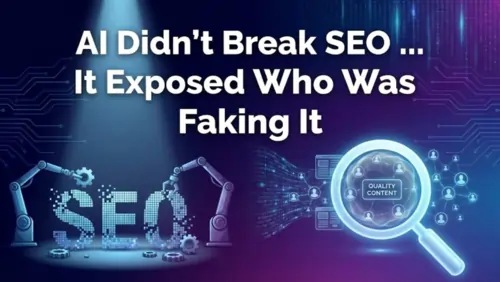
AI didn’t destroy SEO jobs.
It exposed weak ones.
If your SEO process is:
“Generate → Publish → Pray”
You’re already behind.
AI made content creation cheap.
Which means judgment, experience, and structure became expensive.
In 2026:
- AI-written content isn’t bad
- Unreviewed, unstructured, insight-less content is
Search engines aren’t punishing AI.
They’re punishing low-effort output at scale.
That’s why AI content works for some sites and destroys others.
The difference isn’t the tool.
It’s the operator.
Real SEO Is Slower … and That’s Why It Wins
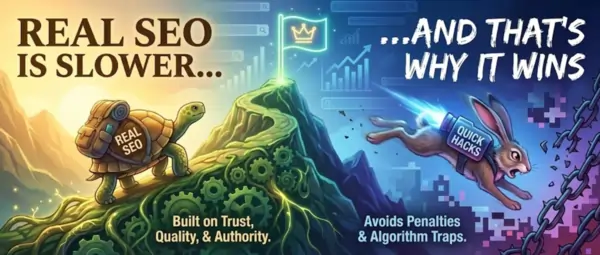
Lazy SEO wants speed.
Real SEO builds momentum.
Real SEO looks boring from the outside:
- Clean site architecture
- Fewer pages, better pages
- Thoughtful internal linking
- Technical hygiene
- Intent-based content
No hacks.
No drama.
No “ranking in 7 days” nonsense.
But over time?
Those sites survive every update while shortcut sites disappear quietly.
That’s not luck.
That’s systems.
The Hard Truth: SEO Is Harder Now — And That’s Good

SEO feels harder in 2026 because:
- You need technical understanding
- You need content judgment
- You need analytical thinking
- You need patience
That’s not a bug.
That’s a filter.
As lazy SEO exits the industry:
- Competition drops
- Standards rise
- Real practitioners stand out
SEO didn’t become less valuable.
It became less forgiving.
SEO Isn’t Pages — It’s Infrastructure

If your site is:
- Slow
- Bloated
- Technically inconsistent
- Difficult to crawl
- Poorly structured
No amount of content will save it.
Modern SEO starts with:
- How your site is built
- How pages relate to each other
- How bots move through your content
- How users behave after landing
SEO today is closer to engineering than marketing.
And lazy marketers hate that.
Updates Don’t Kill Good SEO — They Reveal Bad SEO
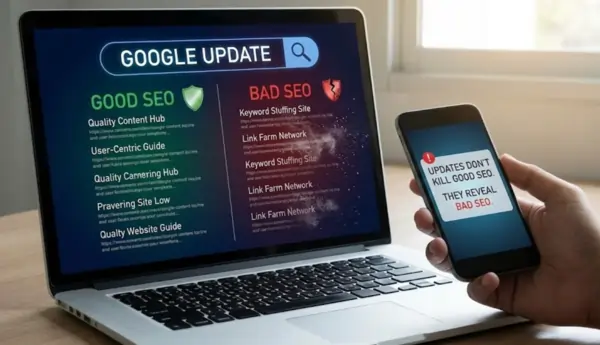
Every major update does the same thing:
- Weak sites panic
- Strong sites barely notice
That’s the real signal.
If your rankings disappear every update, the issue isn’t Google.
It’s fragility.
Good SEO systems are resilient.
Bad ones are reactive.
The People Who Say “SEO Is Dead” Usually Quit First
Here’s the pattern:
- Shortcut works
- Update hits
- Traffic drops
- “SEO is dead” post appears
- Same person moves to the next trend
SEO didn’t fail them.
They failed to evolve.
Meanwhile, experienced SEOs quietly adjust, test, and keep going.
No announcement.
No drama.
Just execution.
Final Reality Check
SEO is not dead.
What died was:
- Low-effort content
- Copy-paste strategies
- Blind trust in tools
- SEO without understanding
What’s left is harder — but far more rewarding.
In 2026 and beyond, SEO belongs to people who:
- Build properly
- Think critically
- Test constantly
- Respect users
- Understand systems
Lazy SEO is gone.
Real SEO is still here — and it’s not going anywhere.
Resources & Further Reading
If you want to go deeper into how modern search actually works—and why shortcuts keep failing—these resources provide reliable context straight from search engines and respected SEO research platforms:
- Google Search Central Blog
https://developers.google.com/search/blog
Official updates and explanations directly from Google on indexing, ranking systems, and spam handling. - Google Search Central Documentation
https://developers.google.com/search/docs
In-depth guidance on crawling, indexing, page quality, and technical SEO foundations. - Google on AI-Generated Content
https://developers.google.com/search/blog/2023/02/google-search-and-ai-content
Google’s official stance explaining why AI content itself isn’t the problem—low-quality content is. - Search Engine Land
https://searchengineland.com
Trusted industry analysis covering algorithm updates, ranking behavior, and long-term SEO trends. - Search Engine Journal
https://www.searchenginejournal.com
Practical SEO insights, case studies, and commentary on changes affecting search visibility. - Ahrefs Blog
https://ahrefs.com/blog
Data-backed research on content quality, links, search intent, and what actually drives rankings. - Screaming Frog Blog
https://www.screamingfrog.co.uk/blog/
Technical SEO insights focused on crawling, indexing, site performance, and search infrastructure. - Jin Grey SEO Expert Profile SEO insights and educational eBooks by Jin Grey: jingrey.com
About the Author