
For a long time, SEO success was measured by one thing: traffic.
More traffic meant better rankings.
Better rankings meant more revenue.
In 2026, that mindset is outdated.
Today, many websites generate consistent income without significant organic traffic, and some of the most profitable SEO strategies barely rely on clicks at all. This shift isn’t accidental—it’s a direct result of how search engines, AI systems, and user behavior have evolved.
This is where SEO without traffic comes in.
Table of Contents
Why SEO Without Traffic Is No Longer a Myth
Search has changed faster than most SEO advice.
With:
- AI Overviews
- Featured snippets
- Knowledge panels
- Zero-click searches
- Brand-driven discovery
Users often get answers without visiting websites.
But money is still being made.
That’s because modern SEO is no longer just about attracting visitors—it’s about influencing decisions, building trust, and supporting revenue paths across the entire funnel.
SEO without traffic doesn’t mean invisibility.
It means visibility without dependence on volume.
From Traffic SEO to Influence SEO
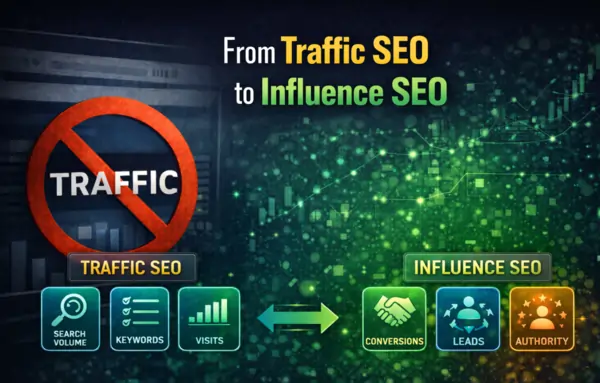
Traditional SEO focused on acquisition.
Modern SEO focuses on impact.
In 2026, SEO contributes to revenue through:
- Brand recall
- Authority signaling
- Lead qualification
- Assisted conversions
- Sales enablement
- Platform credibility
Many of these outcomes don’t show up clearly in traffic charts—but they show up in revenue.
This is the same mindset discussed in Why SEO Is Not Dead (But Lazy SEO Is), where the focus shifts from shortcuts to systems and long-term value.
How SEO Without Traffic Actually Makes Money
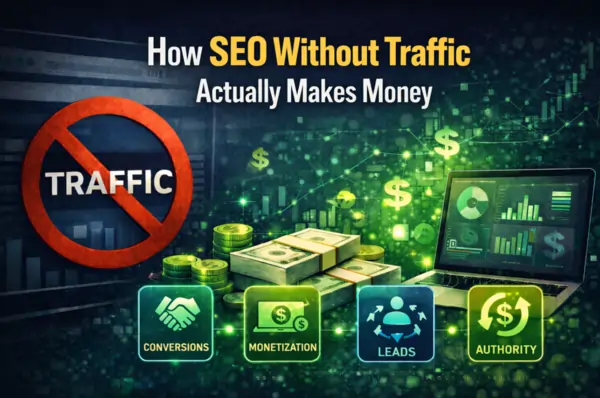
Let’s break down the real monetization paths working today.
1. Lead-Driven SEO (Low Volume, High Value)
Many businesses don’t need thousands of visitors.
They need:
- 10–30 qualified leads per month
- From the right audience
- With clear intent
Industries where this works best:
- Local services
- B2B consulting
- SaaS demos
- Specialized agencies
- Professional services
A page ranking for a niche query might get:
- 50–200 visits per month
Yet still generate:
- High-value inquiries
- Sales conversations
- Long-term clients
This is SEO without traffic focused on intent, not volume.
2. Authority SEO: Being Seen Without Being Clicked
In 2026, being referenced often matters more than being visited.
Websites generate value when they:
- Appear in AI Overviews
- Are cited in summaries
- Show up repeatedly across related searches
Even without clicks, this creates:
- Brand familiarity
- Trust reinforcement
- Perceived expertise
When users finally need a product or service, the brand already feels familiar.
This connects directly to how AI Overviews change keyword strategy —visibility is no longer limited to blue links.
3. SEO as Sales Enablement (Not Acquisition)
Many companies use SEO to support sales, not replace them.
Examples include:
- Pricing explanation pages
- Technical breakdowns
- Product comparison content
- “How it works” documentation
These pages may not bring new users at scale, but they:
- Reduce objections
- Shorten sales cycles
- Improve close rates
- Increase decision confidence
SEO without traffic often increases revenue indirectly, not through raw visits.
4. Affiliate SEO Without Scale
Not all affiliate SEO is about massive traffic.
In 2026, many profitable affiliate pages target:
- Narrow comparisons
- High-intent alternatives
- Specific use cases
Examples:
- “Best X for Y”
- “Is X worth it for Z?”
- “X vs Y for beginners”
A page with:
- 100–300 visits per month
Can outperform one with:
- 10,000 visits
Because intent converts better than volume.
This is SEO without traffic built on precision.
5. SEO for Personal Brands and Experts
Many professionals earn through:
- Consulting
- Coaching
- Speaking
- Courses
- Digital products
Their websites don’t need mass traffic.
They need:
- Credibility
- Search presence
- Authority validation
When someone searches a name, topic, or expertise area and finds:
- Articles
- Profiles
- Thought leadership
That’s SEO without traffic supporting reputation-based income.
6. Content Built for Machines, Not Clicks
Some content exists purely to:
- Be indexed
- Be referenced
- Be understood by search systems
These pages aren’t optimized for engagement.
They’re optimized for:
- Definitions
- Context
- Structure
- Clarity
AI systems rely on these pages even when humans don’t visit them directly.
SEO without traffic often means optimizing for extraction, not interaction.
Why SEO Without Traffic Is Growing in 2026
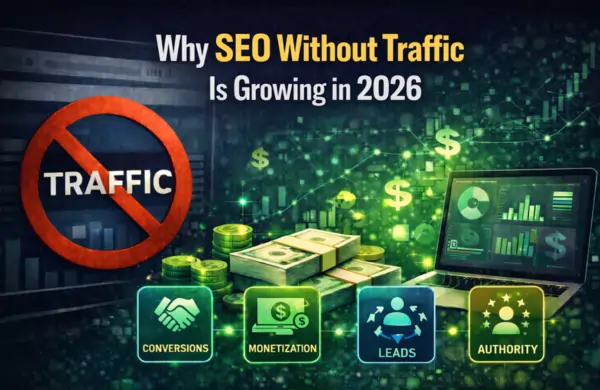
1. Search Is Answer-First
Users want solutions, not pages.
2. AI Redistributes Visibility
Value is spread across summaries, citations, and mentions.
3. SEO Is Now a System
SEO supports branding, trust, and revenue—not just visits.
Common SEO Mistakes When Chasing Traffic Only
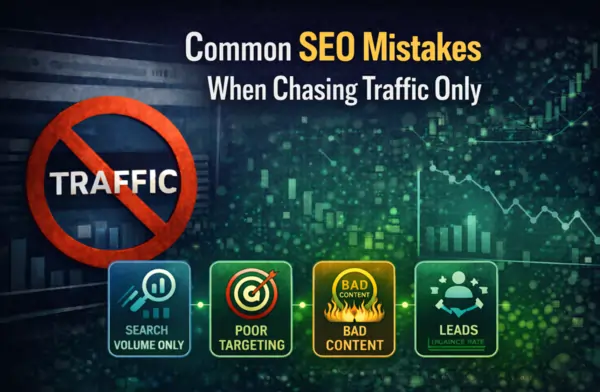
Many SEOs still:
- Judge success by pageviews
- Remove pages that “don’t perform”
- Ignore low-volume keywords
- Devalue supporting content
In reality, some of the most profitable pages:
- Don’t scale
- Don’t trend
- Don’t look impressive in analytics
But they influence decisions quietly.
That’s the core of SEO without traffic.
How to Build an SEO Without Traffic Strategy

Start by asking:
- What decision does this page support?
- Who needs to trust this content?
- What action actually matters?
Then optimize for:
- Clarity
- Authority
- Structure
- Intent
Not volume.
Metrics That Matter More Than Traffic
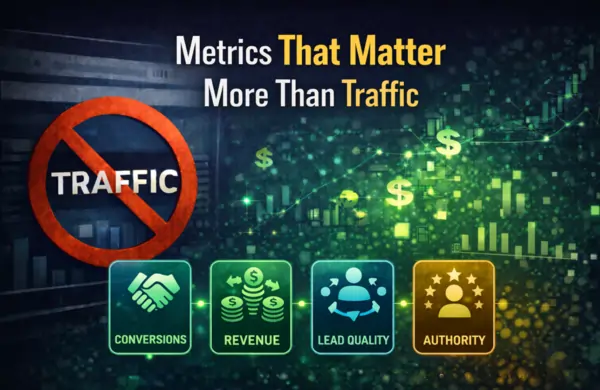
To make SEO without traffic work, track:
- Lead quality
- Assisted conversions
- Branded search growth
- Conversion rate changes
- Sales cycle length
- Attribution paths
Traffic alone no longer tells the full story.
SEO Without Traffic Still Requires Strong SEO
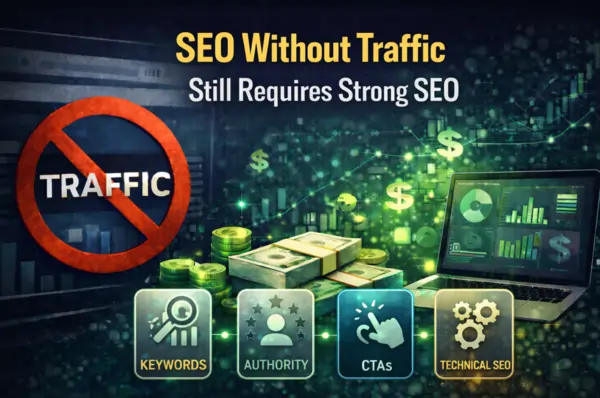
This isn’t an excuse for:
- Thin content
- Weak structure
- Poor technical foundations
SEO without traffic still depends on:
- Solid technical SEO
- Clean information architecture
- Intent-driven content
- Internal linking systems
The difference is how success is measured.
Final Thoughts
SEO without traffic is not easier SEO.
It’s more intentional SEO.
In 2026, people make money from SEO by:
- Influencing decisions
- Supporting conversions
- Building authority
- Being present at the right moment
Traffic is optional.
Impact is not.
Frequently Asked Questions
What does SEO without traffic mean?
SEO without traffic refers to strategies that generate revenue without relying on high visitor volume. It focuses on authority, intent, assisted conversions, and decision influence rather than clicks.
Can SEO still make money without organic traffic?
Yes. Many businesses in 2026 earn through qualified leads, brand trust, AI visibility, and sales enablement—even when organic traffic is low.
Is SEO without traffic suitable for all businesses?
It works best for service businesses, consultants, B2B companies, affiliates targeting high-intent queries, and personal brands where trust matters more than volume.
How do AI Overviews affect SEO without traffic?
AI Overviews reduce clicks for some queries but increase visibility and authority. This supports SEO without traffic by shifting value toward exposure and influence.
What metrics should replace traffic in modern SEO?
Lead quality, assisted conversions, branded search growth, conversion rates, and sales cycle impact are more reliable indicators than traffic alone.
Does SEO without traffic still require technical SEO?
Yes. Strong technical SEO is still essential. The execution stays the same—the success metrics change.
External Resources & References
These sources provide additional context on modern SEO, search visibility, intent, AI-powered results, and how search behavior continues to evolve.
- Google on AI-Generated Content & Search
https://developers.google.com/search/blog/2023/02/google-search-and-ai-content
Official guidance on how AI-generated or AI-assisted content is treated in search. - Google Search Central Documentation
https://developers.google.com/search/docs
Comprehensive reference on crawling, indexing, structured data, and content understanding. - Google on Search Quality & Helpful Content
https://developers.google.com/search/docs/quality-rater-guidelines/overview
Insight into how Google evaluates quality, intent, and usefulness beyond traffic signals. - Search Engine Journal – AI & Search
https://www.searchenginejournal.com/category/artificial-intelligence/
Industry perspective on how AI impacts search visibility and SERP behavior. - Search Engine Land – Search Features & SERP Evolution
https://searchengineland.com/library/google/google-search-features
Overview of SERP feature behavior and how visibility extends beyond traditional rankings. - Moz – Search Visibility Metrics
https://moz.com/learn/seo/search-visibility
Exploration of visibility concepts that go beyond raw traffic numbers. - Ahrefs – Search Intent & Keyword Concepts
https://ahrefs.com/blog/search-intent/
Discussion on search intent, semantic relevance, and contextual optimization.
Written by Jin Grey
Jin Grey is a Full-Stack SEO Expert with 18+ years of hands-on experience across technical SEO, content systems, and long-term search strategy. She writes from real-world execution and testing, not theory.
She also publishes practical SEO eBooks focused on sustainable SEO systems and modern search strategy at https://jingrey.com.